

In this article, we are going to talk about how to load a trailer, as loading a trailer correctly is just as important as choosing the right trailer. Poor weight distribution, unsecured loads or overloading can make a trailer unstable, increase stopping distances and even lead to prosecution if your load is unsafe.
Whether you’re moving house, transporting machinery, carrying a motorcycle or towing garden equipment, following a few simple steps will help keep you, your load, and other road users safe.
Here is our practical guide to loading a trailer safely.
1. Park on Firm, Level Ground
Before loading, make sure your trailer is parked on a firm, level surface.
Apply the trailer handbrake and, where possible, use wheel chocks to prevent the trailer from moving while loading.
If you’re loading a vehicle or motorcycle, ensure the trailer is securely coupled to the towing vehicle before driving onto the trailer.
2. Know Your Trailer’s Maximum Weight
Every trailer has a maximum authorised mass (MAM), which includes both the trailer itself and its load.
Never exceed:
- the trailer’s maximum weight
- your vehicle’s towing capacity
- your towbar’s nose weight limit
These figures can normally be found on the trailer identification plate and in your vehicle handbook.
3. Load Heavy Items First
Place the heaviest items low down and as close to the trailer axle as possible.
This helps keep the trailer stable while towing.
Avoid placing all the weight at the very front or very back of the trailer.
4. Follow the 60/40 Rule
As a general guide:
- approximately 60% of the load should sit in front of the trailer axle
- approximately 40% should sit behind it
Correct weight distribution helps maintain a safe nose weight and reduces the risk of trailer sway at speed.
5. Secure Every Load Properly
Once the trailer has been loaded, secure everything before setting off.
Depending on the load, this may include:
- ratchet straps
- chains
- rope
- cargo nets
- tarpaulins
Even small items can become dangerous if they move during transport. At Sleaford Trailers, one of the most common problems we see is loads that have shifted because they weren’t secured properly. Taking a few extra minutes to check your straps before setting off can prevent damage to both the trailer and the load.
Check the straps again after a few miles. It’s quite common for a load to settle slightly once you begin your journey, so a quick check can help prevent problems later on.
If you’re looking for trailer parts, we can also help you with this.
6. Check Your Nose Weight
Nose weight is the downward force the trailer applies to the towball.
Too little nose weight can cause instability and trailer sway.
Too much can overload your towbar or rear suspension.
Always stay within the manufacturer’s limits.
7. Carry Out Final Safety Checks
Before every journey, check:
- trailer lights
- indicators
- brake lights
- tyres and tyre pressures
- wheel nuts
- coupling security
- breakaway cable
- number plate
- mirrors
If you’re travelling a long distance, stop periodically and recheck your load.
Different Loads Need Different Approaches
Motorcycles & Cars
When loading motorcycles or cars, always use suitable loading ramps and ensure the trailer is securely coupled to the towing vehicle before loading begins. Position the vehicle to achieve the correct weight distribution and secure it using quality ratchet straps or wheel lashing straps at multiple fixing points.
If you need a trailer for transporting a motorcycle or car, Sleaford Trailers offers motorcycle trailer hire and car transporter trailer hire. We’ll make sure you have the right trailer for the job and can advise on the correct lashing straps and safe loading techniques before you set off.
General Household Loads
Pack heavier items at the bottom.
Keep lighter items on top.
Prevent items from moving by filling gaps where possible.
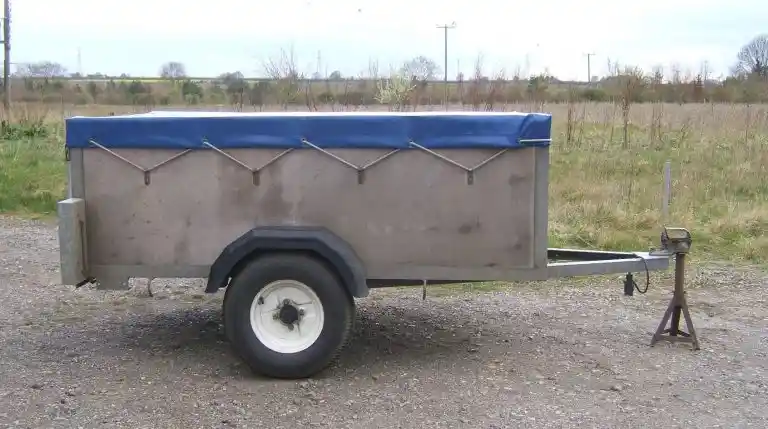
Cover open trailers with a suitable net or tarpaulin.
Common Trailer Loading Mistakes
Even experienced trailer users can make simple loading mistakes. Common issues include:
- placing too much weight behind the axle
- failing to secure loose items
- exceeding the trailer’s maximum weight
- Incorrect nose weight
- forgetting to check the lights before travelling
- over-tightening or under-tightening ratchet straps
Regular Trailer Servicing Helps Keep You Safe
Even a perfectly loaded trailer can become unsafe if brakes, wheel bearings, tyres or suspension components are worn.
Regular inspections help identify problems before they become expensive repairs.
Need Advice?
If you’re unsure which trailer is suitable for your load or would like your trailer checked before a long journey, our experienced team is happy to help.
We regularly assist customers from Sleaford, Lincoln, Grantham, Boston, Newark and Spalding.
Call 01529 462188 for advice.
How to Load a Trailer Safely: FAQs
How should weight be distributed in a trailer?
As a general guide, around 60% of the load should be positioned in front of the trailer axle and 40% behind it to help maintain stability.
What is trailer nose weight?
Nose weight is the downward force the trailer places on the towball. It should always remain within the towing vehicle and towbar manufacturer’s recommended limits.
Should heavy items go at the front of a trailer?
Heavy items should be placed low down and slightly forward of the trailer axle, rather than directly at the very front.
How do you stop a trailer swaying?
Correct weight distribution, suitable nose weight, properly inflated tyres and securely restrained loads all help reduce trailer sway.
Should I check my load during a journey?
Yes. It’s good practice to stop after the first few miles and periodically throughout longer journeys to check straps, chains and load security.
Can an overloaded trailer be illegal?
Yes. Exceeding the trailer’s maximum weight, your vehicle’s towing limit or your towbar’s nose weight limit may make your combination unsafe and unlawful.
This guide is based on industry best practice, manufacturer recommendations and UK towing guidance. Always refer to your vehicle handbook, trailer manufacturer information and current GOV.UK guidance before towing.
Sleaford Trailers | Trailer Servicing | Trailer Repairs | Trailer Hire | Trailer Sales | Lincolnshire White House Farm, Ewerby Thorpe, Sleaford, NG34 9PR Tel: 01529 462188 | sales@sleafordtrailers.co.uk