

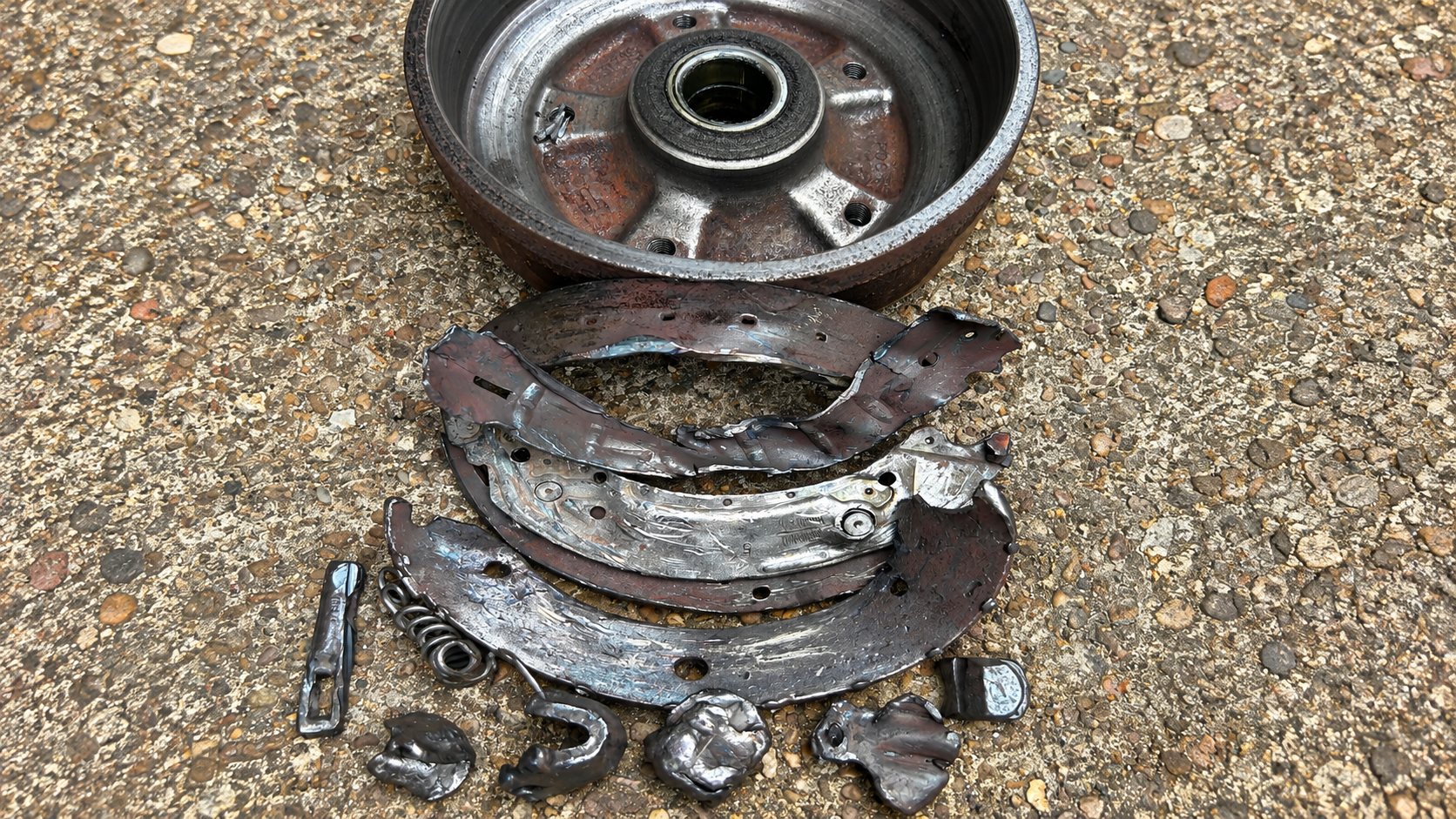
When an Ifor Williams tipper arrived at our Sleaford workshop with a wheel-jamming fault, the problem initially looked less serious than expected. The Ifor Williams trailer brakes showed little sign of the damage from the outside, and the wheel still turned.
Once we removed the hub assembly, the full extent of the damage became clear. Both brake shoes had detached, the brake linings had disappeared and loose components had been moving around inside the drum.
This repair is a useful example of why trailer brake problems should be investigated promptly, even when a trailer is only used for short journeys.
The trailer and the reported problem
The trailer was an Ifor Williams tipper with a gross vehicle weight of 3,500 kg. It had caged sides and was mainly used to transport horse manure.
The customer had noticed that one wheel was jamming and causing severe tyre wear. He took the trailer to a local tyre fitter, who replaced the damaged tyre and advised him to bring the trailer to us so that the underlying mechanical problem could be investigated.
A new tyre could address the visible damage, but it could not correct the fault that had caused the unusual wear.
What did the inspection reveal?
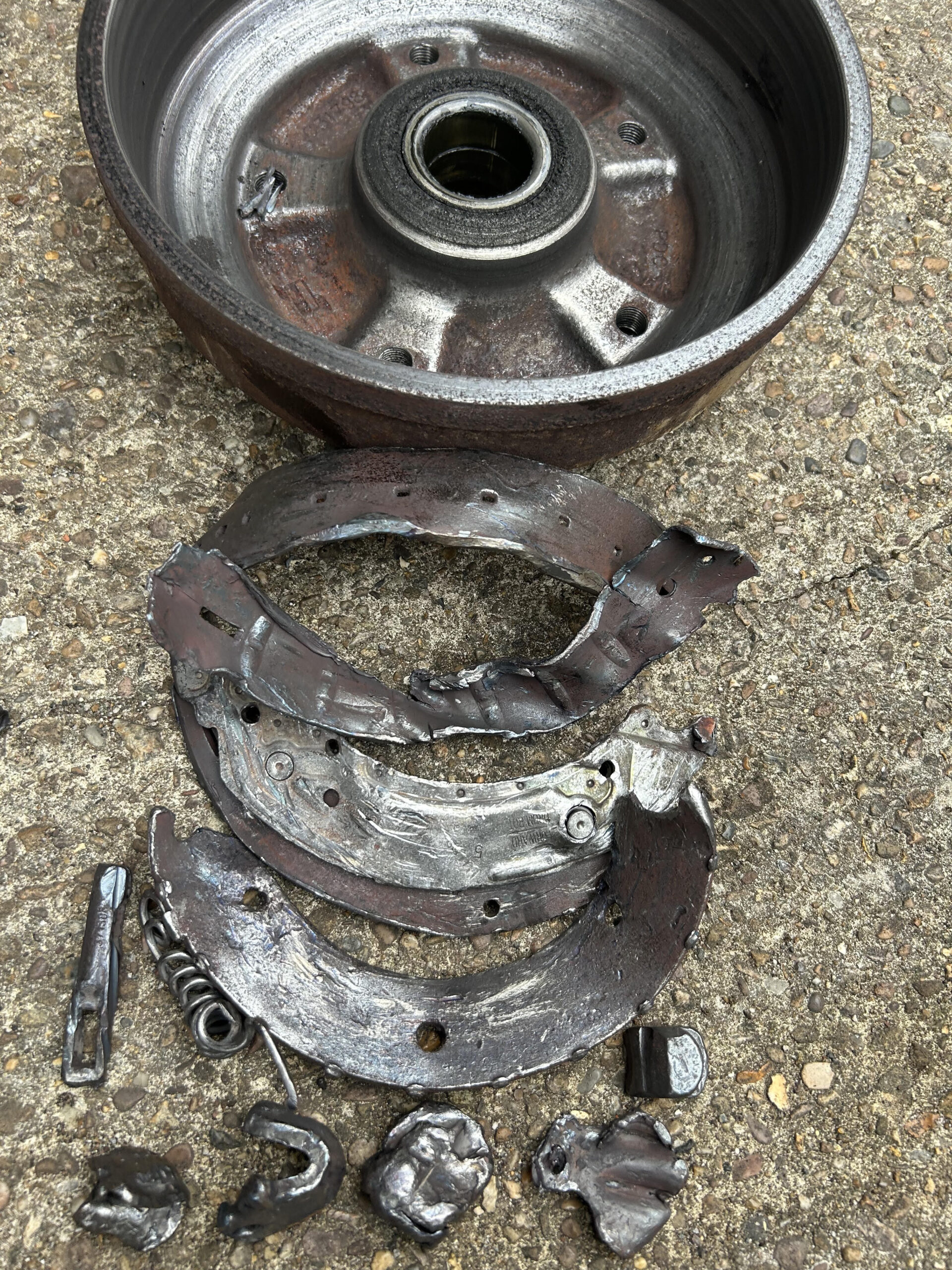
When the trailer arrived, there was no obvious external sign of the damage inside the hub. The wheel rotated, which might have suggested that the fault was intermittent or had temporarily released.
However, when we removed the hub assembly, the damaged brake components fell onto the workshop floor.
Both brake shoes had become detached and had been moving around inside the brake drum. The brake linings had worn away completely, and the loose parts had damaged the backplate and the bearing housing area.
After more than 35 years of working on trailers, this was one of the worst examples of internal brake damage we had encountered.
What caused the Ifor Williams trailer brakes to fail?
The condition of the Ifor Williams trailer brakes suggested that the fault had developed over time without being identified.
At some point, a component inside the brake assembly had failed or become detached. Once the brake shoes were loose, they continued moving around inside the drum and caused further damage to the surrounding parts.
The trailer’s limited mileage did not prevent this from happening. A trailer used for short journeys may still carry substantial loads, and its brakes, bearings, cables and running gear remain subject to wear and deterioration.
Regular trailer maintenance is therefore important regardless of how far the trailer travels. An inspection can identify worn, loose or damaged components before one fault causes damage to several other parts.
What work was agreed with the customer?
We explained what we had found and the work needed to rectify the immediate fault. The customer authorised the repair to the affected wheel.
Fortunately, the axle manufacturer had used a bolt-on brake backplate. This made it possible to remove the damaged assembly without replacing the complete axle.
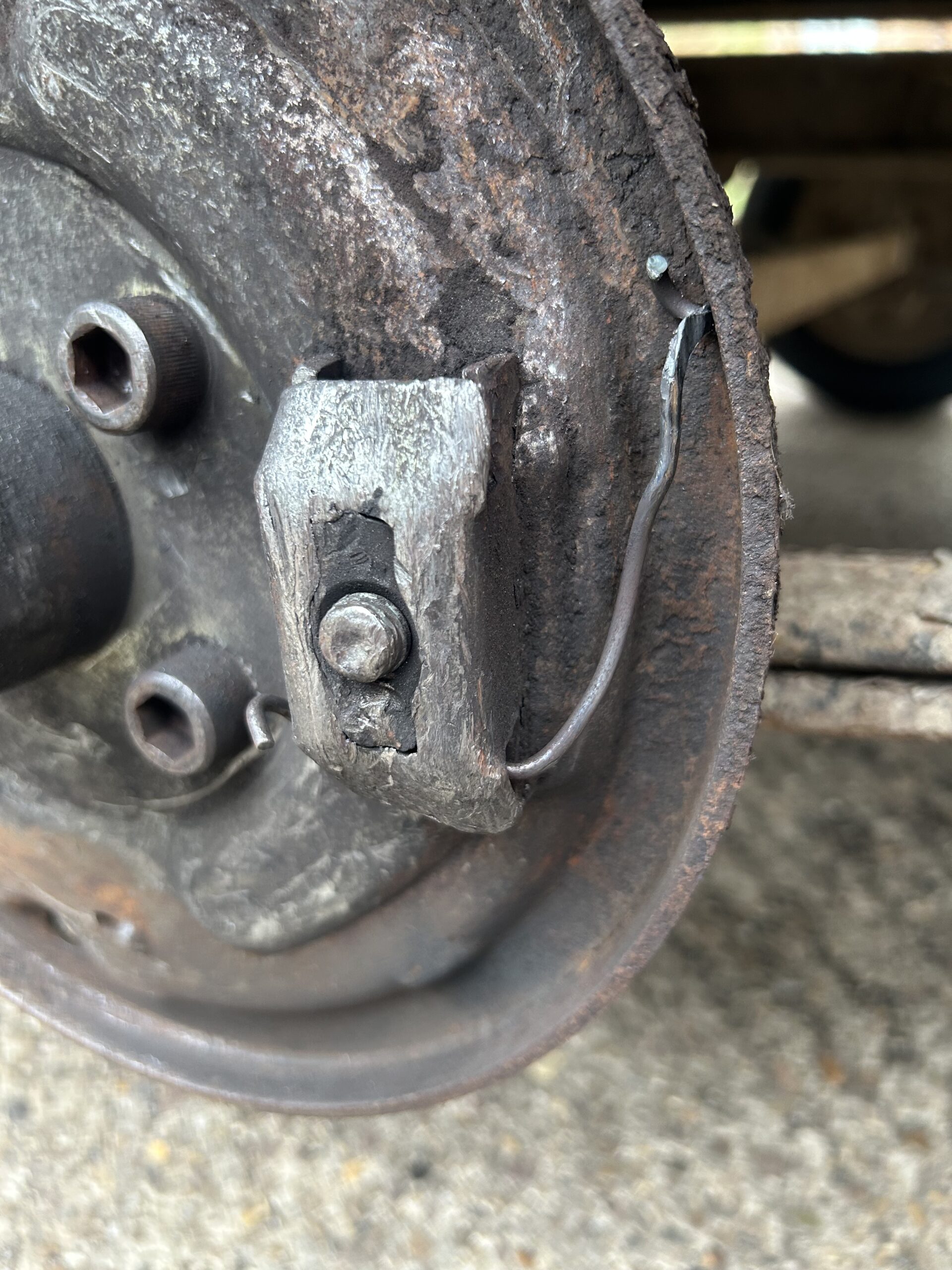
The repair involved:
- Removing the damaged backplate by undoing its four Allen bolts.
- Fitting a complete replacement brake backplate assembly.
- Fitting new brake shoes, an adjuster, an expander and return springs as part of the replacement assembly.
- Reattaching the brake cable.
- Fitting a new brake drum.
- Tightening the hub nut to the correct torque setting.
- Applying and releasing the handbrake to centralise the brake shoes.
- Adjusting the brake shoes correctly.
Replacing the complete backplate assembly was the appropriate repair because of the extent of the damage. This avoided attempting to reuse components that were badly worn or no longer serviceable. Our trailer repairs page explains more about the workshop services we provide.
Was the trailer brake repair successful?
The immediate wheel and brake fault was rectified. After fitting the new backplate assembly and brake drum, the hub nut was tightened to the correct torque. The brake shoes were then centralised by applying and releasing the handbrake, before being adjusted correctly.
The customer had authorised the immediate repair rather than a complete trailer service. We therefore advised him to arrange a full inspection so the remaining brakes, bearings and running gear could also be checked.
Repairing the affected wheel resolved the known fault, but it did not confirm the condition of every component elsewhere on the trailer.
Can a trailer wheel turn normally if the brakes are damaged?
Yes. A wheel that turns during an initial inspection does not necessarily mean that the internal brake components are in good condition.
In this case, the wheel rotated when the trailer arrived, despite serious damage inside the brake drum. The fault could have been intermittent, or the loose components could have shifted position.
The only way to establish the full extent of this particular problem was to remove the hub assembly and inspect the brakes internally.
What are the signs of a trailer brake problem?
- A wheel jamming, dragging or becoming difficult to turn.
- Uneven or unusually rapid tyre wear.
- Scraping, grinding or knocking noises from a wheel.
- A wheel or hub becoming excessively hot.
- Poor or uneven braking.
- The trailer pulling to one side during braking.
- Excessive movement in the handbrake or coupling mechanism.
- A brake that appears to remain partly applied after the handbrake is released.
These symptoms can have several causes. The brakes, bearings, cables and associated components should be examined before further use.
Why regular trailer servicing matters
This case illustrates why Ifor Williams trailer brakes, like any trailer braking system, should be inspected at sensible intervals. A trailer may cover fewer miles than a car or commercial vehicle, but that does not make maintenance unnecessary.
Trailers often remain parked for long periods and may be used in wet, muddy or demanding conditions. Their brakes and running gear can deteriorate even when annual mileage is relatively low.
Regular trailer servicing provides an opportunity to examine the brakes, bearings, tyres, coupling, lights and other safety-related components. Finding a worn part during a service is usually safer and less expensive than waiting for it to fail and damage other parts.
As an NTTA Trusted Workshop, Sleaford Trailers services and repairs most makes of trailer, including Ifor Williams.
Frequently asked questions
What caused this trailer wheel to jam?
Both brake shoes had detached inside the drum. The loose components had been moving around inside the brake assembly, causing extensive damage and intermittently jamming the wheel.
Which parts were replaced?
The trailer received a complete new brake backplate assembly, including brake shoes, an adjuster, an expander and return springs. A new brake drum was also fitted, and the existing brake cable was reattached.
Was the complete trailer serviced?
No. The customer authorised the repair to the immediate fault. We advised him to arrange a complete inspection and service so that the remaining brakes, bearings and running gear could be checked.
Can a new tyre solve a trailer wheel-jamming problem?
A new tyre can replace one that has been damaged, but it will not correct a mechanical fault in the brakes, bearings or hub. The cause of the tyre damage must also be investigated.
Do trailers used for short journeys still need servicing?
Yes. Short journeys do not prevent brake components, bearings, cables and other parts from wearing or deteriorating. Servicing should reflect the trailer’s age, condition, workload, storage conditions and the manufacturer’s recommendations.
Can you repair and service Ifor Williams trailers?
Yes. In our workshop in Sleaford, we carry out servicing and trailer repairs for most makes, including Ifor Williams trailers. We serve customers from across Lincolnshire and the surrounding areas.
Is one of your trailer wheels binding or wearing its tyre?
A binding or jamming wheel should not be ignored. Continuing to use the trailer could cause further damage and may affect its safety.
If your trailer has uneven tyre wear, unusual noises, a hot hub or a wheel that does not rotate freely, contact Sleaford Trailers to arrange an inspection at our Sleaford workshop. Photographs of the affected wheel or damaged components may help us provide initial guidance before you bring the trailer in.